
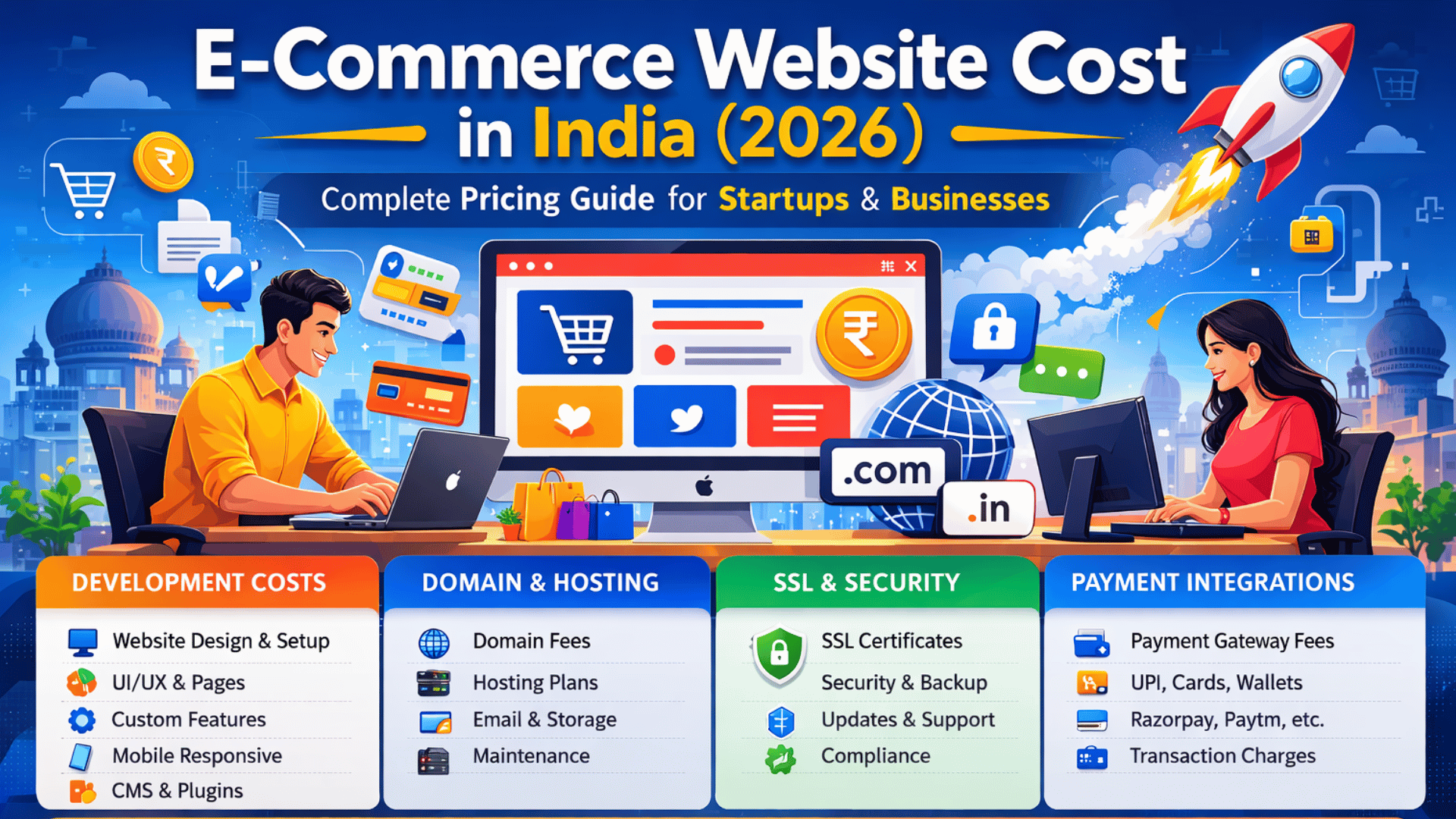

Starting a store in India is really easy now, but people who want to start a business still worry about ecommerce website development cost in India. This is a deal for new businesses and old ones, too. If you are starting a company in Bangalore or if you want to sell things in Mumbai, you need to know how much money you will have to spend at the beginning. This will help you start your business smoothly. You will not spend more money than you have. You can make a start with your online store in India if you know the e-commerce website development cost in INDIA.
The Indian e-commerce market is projected to reach $400 billion by 2030, making this the perfect time to establish your digital storefront. However, the ecommerce website cost in India varies dramatically based on your requirements, technology choices, and development partner. This comprehensive guide breaks down every cost component you need to consider in 2026.
Understanding the Ecommerce Website Development Landscape in India
India’s digital commerce ecosystem has matured significantly, offering businesses multiple pathways to establish their online presence. From ready-made platforms to fully customised solutions, the ecommerce website cost in India spectrum ranges from as low as ₹1,20,000 for basic setups to over ₹35,00,000 for enterprise-grade platforms with Smart AI tools integrations.
The cost variation depends on several factors, including platform choice, design complexity, feature requirements, payment gateway integration, and ongoing maintenance needs. Cities like Delhi, Bangalore, Mumbai, Chennai, Hyderabad, Pune, and Kolkata each have thriving tech communities, though pricing can fluctuate based on regional demand and talent availability.
Breakdown of Ecommerce Website Cost in India
Basic Ecommerce Website (₹1,20,000 – ₹1,75,000)
Perfect for startups and small businesses testing the waters, a basic e-commerce website typically includes:
- Premium Template-based design with Minimal Customisation
- 50-100 product listings
- Standard payment gateway integration (Razorpay, PayU, or Paytm)
- Basic SEO setup
- Mobile-responsive design
- Simple shopping cart and checkout process
- Contact forms and basic customer support features
This tier usually leverages platforms like WooCommerce, Shopify, or OpenCart. Development time ranges from 2-4 weeks, making it ideal for businesses that need to launch quickly without heavy investment.
Mid-Range Ecommerce Platform (₹1,75,000 – ₹3,50,000)
This category suits growing businesses requiring more functionality and brand customisation:
- Semi-custom design aligned with brand identity
- 500-1000 product capacity
- Multiple payment gateway options
- Advanced product filtering and search
- Customer account management
- Inventory management system
- Email marketing integration
- Blog/content management system
- Social media integration
- Enhanced security features (SSL certificates, secure checkout)
- Basic analytics and reporting
Development partners like Webshark Corporation typically deliver mid-range solutions within 6-12 weeks, balancing customisation with cost-effectiveness. These platforms often use technologies like Magento, WooCommerce with extensions, or custom PHP frameworks.
Premium Custom Ecommerce Solution (₹3,50,000 – ₹10,00,000)
Established businesses and ambitious startups opt for premium solutions that offer:
- Fully custom design and user experience
- Unlimited product listings
- Advanced inventory management with multi-warehouse support
- Customer relationship management (CRM) integration
- Automated email and SMS marketing campaigns
- Wishlist and product comparison features
- Advanced analytics and business intelligence dashboards
- Multi-currency and multi-language support
- Loyalty programs and discount management
- Vendor management systems for multi-vendor marketplaces
- Custom API integrations with third-party tools
- Progressive Web App (PWA) capabilities
These projects typically span 3-6 months and involve dedicated development teams with specialised skills in UX/UI design, backend development, and quality assurance.
Enterprise-Level Ecommerce Platform (₹10,00,000 – ₹35,00,000+)
Large-scale businesses and corporations require robust, scalable solutions:
- Headless commerce architecture
- Microservices-based development
- AI-powered personalisation and product recommendations
- Advanced search with machine learning
- Omnichannel integration (online, offline, mobile app)
- Enterprise resource planning (ERP) integration
- Supply chain management integration
- Custom mobile applications (iOS and Android)
- Advanced security protocols and compliance features
- Dedicated server infrastructure
- Real-time inventory synchronisation across multiple channels
- B2B and B2C hybrid capabilities
- Custom reporting and data analytics tools
Enterprise projects often take 6-12 months and require ongoing support from specialised agencies with proven track records in handling complex e-commerce ecosystems.
Component-Wise Cost Breakdown
Understanding where your budget goes helps in making informed decisions. Here’s a detailed breakdown of individual components:
| Component | Basic | Mid-Range | Premium | Enterprise |
| Design & UI/UX | ₹40,000 – ₹60,000 | ₹95,000 – ₹1,25,000 | ₹1,00,000 – ₹2,50,000 | ₹3,00,000 – ₹7,00,000 |
| Development | ₹60,000 – ₹90,000 | ₹1,40,000 – ₹2,00,000 | ₹2,00,000 – ₹5,00,000 | ₹6,00,000 – ₹15,00,000 |
| Payment Gateway | ₹0 – ₹5,000 | ₹5,000 – ₹15,000 | ₹15,000 – ₹30,000 | ₹30,000 – ₹75,000 |
| Hosting (Annual) | ₹3,000 – ₹10,000 | ₹10,000 – ₹40,000 | ₹40,000 – ₹1,20,000 | ₹1,50,000 – ₹5,00,000 |
| SSL Certificate | ₹1,000 – ₹3,000 | ₹3,000 – ₹8,000 | ₹8,000 – ₹20,000 | ₹25,000 – ₹60,000 |
| Domain Name | ₹500 – ₹1,500 | ₹1,500 – ₹5,000 | ₹5,000 – ₹15,000 | ₹15,000 – ₹50,000 |
| Mobile App | N/A | N/A | ₹2,50,000 – ₹6,00,000 | ₹7,00,000 – ₹20,00,000 |
| Testing & QA | ₹2,000 – ₹5,000 | ₹10,000 – ₹30,000 | ₹40,000 – ₹80,000 | ₹1,00,000 – ₹2,50,000 |
Ecommerce Website Cost in India: City-Wise Pricing (Delhi, Bangalore, Mumbai)
The ecommerce website cost in India varies significantly across different cities due to factors like talent availability, cost of living, competition, and market maturity. Understanding these regional differences helps businesses budget more accurately and choose the right development partner.
Bangalore: The Silicon Valley of India
Bangalore remains India’s Premier Technology Hub, hosting numerous startups and established IT companies. The city’s competitive tech ecosystem influences the ecommerce website price in Bangalore significantly.
Pricing Structure in Bangalore:
| Service Type | Cost Range | Key Characteristics |
| Basic E-commerce Website | ₹1,20,000 – ₹1,75,000 | Slightly higher than the national average due to quality expectations |
| Mid-Range Platform | ₹1,75,000 – ₹3,00,000 | Strong emphasis on modern tech stacks and scalability |
| Premium Solutions | ₹3,00,000 – ₹10,00,000 | Advanced features with cutting-edge technology |
| Enterprise Level | ₹10,00,000 – ₹30,00,000+ | Full-scale solutions with AI/ML integration |
Why Bangalore Commands Premium Pricing: Bangalore’s talent pool consists of highly skilled developers with expertise in the latest technologies. Companies here often adopt React, Node.js, Python-based frameworks, and cloud-native architectures. The city’s startup culture means developers are well-versed in building scalable solutions from day one. Agencies in Bangalore typically charge 10-20% more than the national average, but deliver faster turnarounds and more innovative solutions.
Average Hourly Rates: Junior developers charge ₹800-₹1,500 per hour, mid-level developers command ₹1,500-₹3,000 per hour, while senior developers and architects can charge ₹3,500-₹6,000 per hour.
Mumbai: The Commercial Capital
Mumbai’s status as India’s financial hub translates into a sophisticated e-commerce development market. The city hosts numerous established agencies alongside boutique firms specialising in luxury and premium brands.
Pricing Structure in Mumbai:
| Service Type | Cost Range | Market Position |
| Basic E-commerce Website | ₹90,000 – ₹1,60,000 | Competitive pricing with focus on design |
| Mid-Range Platform | ₹170,000 – ₹2,75,000 | Strong emphasis on payment security and brand aesthetics |
| Premium Solutions | ₹2,75,000 – ₹9,00,000 | Luxury brand focus with premium UX/UI |
| Enterprise Level | ₹9,00,000 – ₹28,00,000+ | Complete omnichannel solutions |
Mumbai’s Unique Advantages: The city’s proximity to major retail brands and financial institutions makes it ideal for businesses requiring robust payment integrations and compliance features. Mumbai-based agencies excel in creating visually stunning, brand-focused ecommerce experiences. The city’s diverse market exposure means developers understand various industry verticals from fashion to electronics.
Specialized Services: Mumbai agencies often bundle services like professional product photography (₹15,000-₹50,000), brand strategy consultation (₹25,000-₹1,00,000), and influencer marketing integration, which can add ₹50,000-₹2,00,000 to overall project costs.
Delhi-NCR: The Political and Business Hub
The National Capital Region encompasses Delhi, Noida, Gurugram, and Ghaziabad, creating a massive market for ecommerce development services. This region offers the most diverse pricing options in India.
Pricing Structure in Delhi-NCR:
| Service Type | Cost Range | Regional Benefits |
| Basic Ecommerce Website | ₹75,000 – ₹160,000 | Most competitive pricing in metro cities |
| Mid-Range Platform | ₹160,000 – ₹2,25,000 | Balance of affordability and quality |
| Premium Solutions | ₹2,25,000 – ₹9,50,000 | Strong project management capabilities |
| Enterprise Level | ₹9,50,000 – ₹25,00,000+ | Government and large corporate experience |
Delhi-NCR’s Cost Advantages: The region offers the best value proposition for businesses seeking quality without premium pricing. Noida and Gurugram host numerous IT parks with competitive agencies. The cost of operations is lower than Bangalore or Mumbai, translating to savings for clients. Companies like Webshark Corporation leverage Delhi-NCR’s advantages to deliver cost-effective solutions without compromising quality.
Talent Diversity: The region attracts talent from across North India, creating competitive hourly rates: ₹600-₹1,200 for junior developers, ₹1,200-₹2,500 for mid-level professionals, and ₹2,500-₹5,000 for senior experts.
Chennai: The Emerging Tech Powerhouse
Chennai has rapidly evolved into a significant IT destination, offering excellent value for money in ecommerce development.
Pricing Structure in Chennai:
| Service Type | Cost Range |
| Basic Ecommerce Website | ₹90,000 – ₹1,65,000 |
| Mid-Range Platform | ₹1,65,000 – ₹3,00,000 |
| Premium Solutions | ₹3,00,000 – ₹8,50,000 |
| Enterprise Level | ₹8,50,000 – ₹22,00,000+ |
Chennai’s Value Proposition: The city offers 15-25% lower costs compared to Bangalore while maintaining high quality standards. Chennai-based developers are known for thorough documentation and disciplined project management. The city’s strong manufacturing sector means developers have extensive experience with inventory management and B2B ecommerce solutions.
Hyderabad: The City of Opportunities
Hyderabad has emerged as a major IT hub, hosting tech giants and innovative startups alike. The city’s growth in artificial intelligence and cloud computing reflects in its ecommerce development capabilities.
Pricing Structure in Hyderabad:
| Service Type | Cost Range |
| Basic Ecommerce Website | ₹1,20,000 – ₹1,75,000 |
| Mid-Range Platform | ₹1,75,000 – ₹3,40,000 |
| Premium Solutions | ₹3,40,000 – ₹9,00,000 |
| Enterprise Level | ₹9,00,000 – ₹24,00,000+ |
Hyderabad’s Specializations: The city excels in AI-powered ecommerce features, chatbot integration, and data analytics. Agencies here often include advanced features like predictive analytics and personalization engines even in mid-range packages. The presence of major tech companies has created a talent pool skilled in enterprise-grade solutions.
Pune: The Education and IT Hub
Pune combines affordable pricing with quality talent, making it an attractive option for businesses seeking cost-effective solutions.
Pricing Structure in Pune:
| Service Type | Cost Range |
| Basic Ecommerce Website | ₹75,000 – ₹1,40,000 |
| Mid-Range Platform | ₹1,40,000 – ₹2,15,000 |
| Premium Solutions | ₹2,15,000 – ₹7,75,000 |
| Enterprise Level | ₹7,75,000 – ₹23,00,000+ |
Pune’s Competitive Edge: The city offers Mumbai-quality work at significantly lower prices due to lower operational costs. Pune’s proximity to Mumbai means easy collaboration for businesses based in the financial capital. The city’s young workforce brings fresh perspectives to ecommerce design and functionality.
Kolkata: The Cultural Capital
Kolkata’s growing IT sector provides budget-friendly options for ecommerce development while maintaining acceptable quality standards.
Pricing Structure in Kolkata:
| Service Type | Cost Range |
| Basic Ecommerce Website | ₹60,000 – ₹140,000 |
| Mid-Range Platform | ₹1,40,000 – ₹2,80,000 |
| Premium Solutions | ₹2,80,000 – ₹8,00,000 |
| Enterprise Level | ₹8,00,000 – ₹20,00,000+ |
Kolkata’s Advantages: The city offers the most competitive pricing among major metros, making it ideal for startups with tight budgets. Kolkata developers are known for creative design approaches and attention to cultural nuances in user experience. The city’s emerging tech community is eager to prove itself, often going the extra mile for client satisfaction.
Choosing the Right City for Your Ecommerce Project
Budget-Conscious Startups: Consider Kolkata, Chennai, or Pune for maximum cost savings without significant quality compromise. These cities can deliver basic to mid-range solutions at 20-30% lower costs than Bangalore or Mumbai.
Quality and Innovation Focus: Bangalore remains the top choice for businesses wanting cutting-edge technology and scalable architecture. The premium pricing ensures access to India’s best tech talent and latest development practices.
Balance of Cost and Quality: Delhi-NCR and Hyderabad offer excellent middle ground, providing modern development approaches at reasonable prices. Webshark Corporation and similar agencies in these regions deliver competitive solutions across all budget ranges.
Luxury and Brand-Focused Projects: Mumbai’s expertise in premium aesthetics and brand positioning makes it ideal for fashion, jewelry, and lifestyle ecommerce ventures.
Industry-Specific Needs: Chennai excels in B2B and manufacturing ecommerce, Hyderabad leads in AI-integrated solutions, while Pune offers versatility across sectors.
Regional Cost-Saving Strategies
Regardless of city choice, businesses can optimize their ecommerce website cost in India through smart planning. Start with a minimum viable product in a cost-effective city, then scale features based on actual user feedback. Consider hybrid teams where strategy and design come from premium cities while development happens in more affordable locations. Many successful businesses partner with agencies that have distributed teams across multiple cities, combining talent advantages with cost efficiencies.
Ongoing Costs and Maintenance
The initial development represents only part of your total investment. Plan for these recurring expenses:
Monthly Maintenance (₹5,000 – ₹50,000)
- Security updates and patches
- Bug fixes and minor improvements
- Content updates and product listing management
- Performance monitoring
- Backup and disaster recovery
- Technical support
Annual Renewals (₹15,000 – ₹2,00,000)
- Domain registration renewal
- SSL certificate renewal
- Hosting and server costs
- Software license renewals
- Payment gateway annual fees
- Third-party plugin subscriptions
Marketing and Growth (₹20,000 – ₹5,00,000+ monthly)
- Search engine optimization (SEO)
- Pay-per-click advertising
- Social media marketing
- Email marketing campaigns
- Content creation and blogging
- Conversion rate optimization
Platform Comparison: Making the Right Choice
WooCommerce (WordPress-based)
Best for: Small to medium businesses, content-rich stores
E-commerce website price in India: ₹1,20,000 – ₹3,00,000
Advantages: Highly customizable, vast plugin ecosystem, SEO-friendly, cost-effective
Limitations: Can slow down with large product catalogues, requires regular updates
Shopify
Best for: Quick launches, businesses wanting minimal technical involvement
Ecommerce website cost in India: ₹1,65,000 – ₹5,50,000 (plus monthly subscription ₹1,500 – ₹20,000)
Advantages: User-friendly, reliable hosting included, automatic updates, excellent support
Limitations: Monthly fees, limited customisation compared to open-source solutions, and transaction fees
Magento (Adobe Commerce)
Best for: Medium to large businesses with complex requirements
E-commerce website development cost in India: ₹8,00,000 – ₹25,00,000+
Advantages: Extremely scalable, powerful features, multi-store management, strong B2B capabilities
Limitations: Requires technical expertise, higher hosting costs, steeper learning curve
Custom PHP/Laravel Solutions
Best for: Businesses with unique requirements not met by standard platforms
E-commerce website cost in India: ₹15,00,000 – ₹60,00,000+
Advantages: Complete control, tailored to exact specifications, no licensing fees, can integrate with any system
Limitations: Longer development time, requires skilled developers for maintenance
Hidden Costs to Consider
Many businesses underestimate the total investment required for a successful e-commerce venture. Consider these often-overlooked expenses:
Product Photography and Videography (₹20,000 – ₹2,00,000): Professional images significantly impact conversion rates. Budget for initial shoots and ongoing content creation.
Content Writing and SEO (₹15,000 – ₹1,00,000): Quality product descriptions, category pages, and blog content require skilled writers who understand both SEO and your industry.
Legal and Compliance (₹25,000 – ₹1,50,000): Terms of service, privacy policies, GST compliance, and legal consultation shouldn’t be overlooked.
Merchant Account Setup (₹10,000 – ₹50,000): Beyond payment gateway integration, you may need dedicated merchant accounts with banks for better rates.
Customer Service Tools (₹5,000 – ₹40,000 annually): Live chat software, helpdesk systems, and customer relationship management tools add up.
Analytics and Tracking (₹10,000 – ₹80,000 annually): Advanced analytics beyond Google Analytics, heat mapping tools, and A/B testing platforms.
Cost-Saving Strategies Without Compromising Quality
Smart businesses can optimize their ecommerce website development cost in India through strategic planning:
Start with MVP (Minimum Viable Product): Launch with essential features and add advanced functionality based on user feedback and revenue. This approach reduces initial investment by 30-50%.
Choose the Right Platform: Don’t over-engineer your solution. A growing startup doesn’t need Magento’s complexity if WooCommerce meets current needs.
Phased Development: Break your project into phases with clear milestones. This spreads costs over time and allows budget adjustments based on business performance.
Leverage Open Source: Open-source platforms eliminate licensing fees and offer extensive customisation possibilities through plugins and themes.
Hire Regional Talent: As discussed in the city-wise breakdown, location significantly impacts pricing. A Chennai-based agency might deliver the same quality as a Mumbai firm at lower costs.
Negotiate Package Deals: Many agencies offer bundled services (design, development, hosting, maintenance) at discounted rates compared to separate contracts.
DIY Where Possible: Handle content creation, basic product uploads, and initial marketing internally, reserving professional help for technical aspects.
Choosing the Right Development Partner
Selecting the right agency or freelancer dramatically impacts both cost and outcome quality. Consider these factors:
Portfolio and Experience: Review previous e-commerce projects, especially in your industry. Companies like Webshark Corporation showcase diverse portfolios demonstrating versatility across sectors.
Technical Expertise: Ensure they have experience with your chosen platform and understand modern development practices like responsive design, API integration, and security protocols.
Communication and Support: Clear communication prevents costly revisions. Verify their process for updates, feedback, and post-launch support.
Transparent Pricing: Reputable agencies provide detailed quotations breaking down all cost components. Be wary of significantly low quotes that might indicate hidden charges later.
Client References: Speak with previous clients about their experience regarding timeline adherence, budget management, and post-launch support.
Scalability Understanding: Your development partner should build solutions that grow with your business, not require complete rebuilds as you expand.
Industry-Specific Considerations
Different industries have unique requirements affecting the ecommerce website cost in India:
Fashion and Apparel (₹1,45,000 – ₹8,00,000): Requires advanced filtering, size guides, wishlist functionality, and high-quality image galleries. Visual appeal is paramount.
Electronics and Gadgets (₹1,00,000 – ₹10,00,000): Needs detailed product specifications, comparison features, warranty management, and robust inventory systems.
Food and Grocery (₹1,50,000 – ₹12,00,000): Demands real-time inventory, delivery zone management, perishability tracking, and quick checkout processes.
Jewellery and Luxury Items (₹4,60,000 – ₹15,00,000): Requires high-security features, virtual try-on capabilities, customisation tools, and premium design aesthetics.
Digital Products and Services (₹50,000 – ₹5,00,000): Needs secure download delivery, license management, subscription handling, and digital rights protection.
Future-Proofing Your Investment
Technology evolves rapidly. Ensure your e-commerce website remains relevant through:
Progressive Web App (PWA) Capabilities: PWAs offer app-like experiences without installation. Adding PWA functionality costs ₹50,000 – ₹2,00,000 but significantly improves mobile engagement.
Headless Commerce Architecture: Separating frontend and backend allows greater flexibility for future integrations. While initially more expensive (₹3,00,000 – ₹12,00,000), it reduces long-term modification costs.
API-First Development: Ensures easy integration with future technologies, third-party services, and emerging sales channels.
Cloud Infrastructure: Cloud hosting provides scalability and reliability. Initial setup costs more (₹30,000 – ₹1,50,000) but offers better long-term value.
AI and Machine Learning Ready: Building infrastructure that can incorporate AI-powered recommendations, chatbots, and predictive analytics positions you for competitive advantages.
Return on Investment Expectations
Understanding the financial returns helps justify your ecommerce website cost in India:
Break-Even Timeline: Well-executed ecommerce websites typically achieve break-even within 8-18 months, depending on marketing investment and market conditions.
Revenue Multipliers: Successful online stores generate 3-10 times their initial investment annually once established. Premium features like personalization and advanced search can increase conversion rates by 20-40%.
Cost per Acquisition: Professional ecommerce websites reduce customer acquisition costs by 30-50% compared to marketplace-only presence through owned customer relationships and lower commission structures.
Lifetime Customer Value: Owned platforms build direct customer relationships, increasing lifetime value by 2-5 times compared to marketplace-dependent models.
Final Recommendations
The ecommerce website cost in India for 2026 reflects the sophisticated digital commerce landscape available to businesses of all sizes. Whether you invest ₹25,000 or ₹25,00,000, focus on these priorities:
Start with Clear Objectives: Define your business goals, target audience, and essential features before approaching developers. This clarity prevents scope creep and budget overruns.
Prioritise User Experience: A beautifully designed website that confuses customers won’t succeed. Invest in intuitive navigation, fast loading speeds, and seamless checkout processes.
Build for Mobile First: With over 70% of Indian ecommerce traffic coming from mobile devices, mobile optimisation isn’t optional—it’s essential.
Invest in Security: Customer trust depends on secure transactions. SSL certificates, PCI compliance, and regular security audits protect both your customers and your reputation.
Plan for Growth: Choose scalable solutions that accommodate increasing traffic, expanding product catalogues, and evolving business models without requiring complete rebuilds.
Balance Cost and Quality: The cheapest option rarely delivers the best results, but the most expensive doesn’t guarantee success either. Seek partners offering transparent pricing, proven expertise, and ongoing support at rates aligned with your budget.
Whether you’re a startup in Kolkata testing a new product category or an established Mumbai retailer expanding online, understanding the complete cost picture enables informed decisions. Partner with experienced agencies like Webshark Corporation that understand your budget constraints while delivering solutions that drive real business results.
Remember that while the initial ecommerce website cost in India represents a significant investment, the returns from a well-executed online presence—expanded market reach, reduced operational costs, 24/7 sales capability, and valuable customer data—far exceed the upfront expenditure for businesses that approach ecommerce strategically and commit to ongoing optimisation and growth.