Hire Dedicated Tailwind CSS Developers In India
Building pixel-perfect, utility-first UIs with high-performance backends.
- Unified architectures for Web, Mobile, and Desktop environments.
- Specialists in MERN, MEAN, and Next.js for SaaS & ERP systems.
- Resilient backend microservices with real-time data sync.
- Cloud-native deployment with integrated DevOps and automated CI/CD.
Tailwind CSS Engineering Excellence for Scalable Product Ecosystems


Tailwind CSS Engineering Hub in India
Accelerate your frontend velocity with Webshark’s senior Tailwind CSS engineers, specialized in building high-performance, utility-first UI systems. Our team leverages JIT compilation, custom design tokens, and PurgeCSS optimization to deliver enterprise-grade interfaces that ensure sub-second responsiveness and global scale. By prioritizing atomic CSS patterns and clean-code standards, we help global leaders reduce technical debt and maintain resilient, pixel-perfect design systems across massive digital ecosystems at scale.
Atomic CSS Mastery
Implementing atomic CSS patterns to reduce stylesheet sizes by up to 80%, ensuring faster load times and zero class-name collisions.
Responsive Fluidity
Utilizing Tailwind’s mobile-first breakpoints to build adaptive layouts that maintain visual integrity across 4K displays and mobile handsets.
JIT Performance Tuning
Leveraging Just-in-Time compilation to generate CSS on-demand, resulting in ultra-fast HMR (Hot Module Replacement) and optimized dev-build cycles.
Custom Design Tokens
Configuring Tailwind theme extensions to map directly to your Figma design tokens, ensuring strict adherence to your brand’s visual language.
Dynamic Theming
Developing sophisticated dark mode and multi-tenant theme switching using CSS variables integrated with Tailwind’s utility classes.
Framework-Agnostic UI
Integrating Tailwind with React, Vue, or Next.js to build headless UI components that are reusable across different product environments.
Core Tailwind CSS & Frontend Specializations
Expert Frontend Engineers in India delivering pixel-perfect, utility-first interfaces through mastery of modern CSS frameworks and component architectures.


React & Tailwind Integration
Building highly interactive, component-based UIs with React and styling them with utility-first classes for maximum maintainability.

Next.js & Performance UIs
Leveraging Next.js App Router and Tailwind JIT to deliver SEO-friendly, server-rendered applications with zero CSS bloat.

Atomic Design Systems
Architecting scalable UI kits by mapping Figma variables directly to Tailwind configurations for consistent, multi-tenant branding.

Adaptive Layout Architecture
Utilizing Tailwind's mobile-first modifiers to build seamless, adaptive experiences for all device viewports and screen densities.

Interactive Motion UIs
Combining Tailwind's utility classes with Framer Motion to create smooth, high-performance animations and state-driven transitions.

Type-Safe Styling
Implementing TypeScript-integrated Tailwind workflows to ensure type safety across themes, components, and custom design tokens.
Featured Work
High-performance UIs and utility-first design systems engineered in India for scalable, production-grade enterprise products.

A conceptual redesign enhancing usability, visual clarity, and performance while maintaining the brand’s premium identity.

A conceptual redesign enhancing the digital experience for Stephen Webster’s iconic jewelry collections.

A scalable app redesign focused on faster ordering, improved usability, and a seamless food discovery experience for high-volume, on-demand users.

A high-performance digital redesign blending French elegance with a seamless, personalized e-commerce journey for Gemmyo’s bespoke collections.
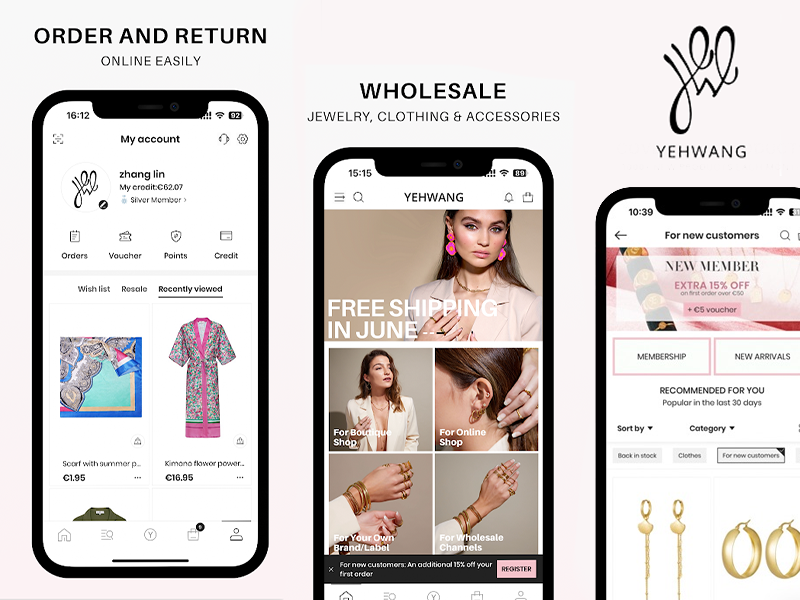
A refined mobile experience designed to showcase products, enhance browsing flow, and elevate brand presence for a fashion-forward global audience.

A sophisticated digital transformation showcasing Haddonstone’s craftsmanship through high-fidelity project visualization and refined product discovery.

A conceptual redesign focused on premium storytelling, personalized discovery, and seamless navigation across a global luxury fashion marketplace.

A vibrant digital overhaul capturing Free People’s eclectic aesthetic with enhanced visual storytelling and a seamless, community-driven shopping journey.
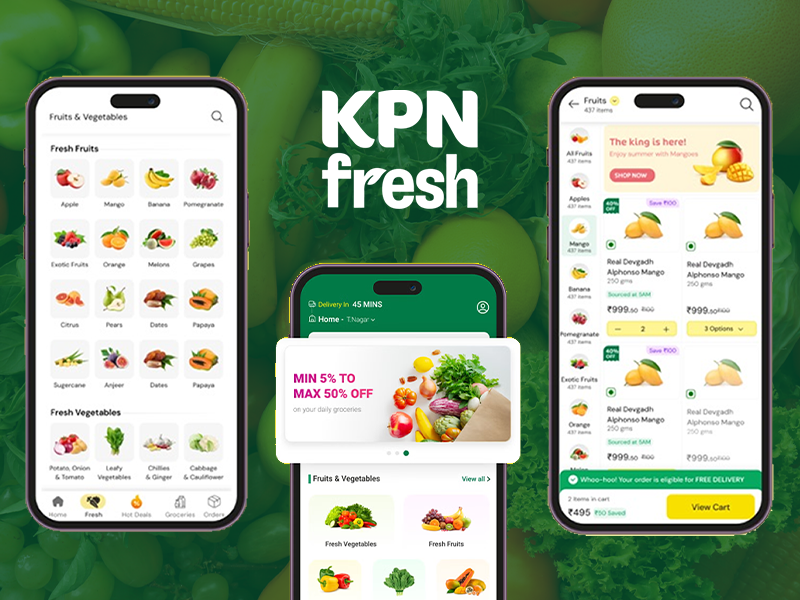
A fast and intuitive grocery delivery app experience focused on easy product discovery, quick reordering, and a seamless checkout journey for everyday shopping.

A sophisticated digital evolution for a Dubai-based construction leader, showcasing five decades of general contracting excellence and landmark regional projects.
Vetting Framework to Hire Tailwind CSS Developers
A rigorous screening process to integrate elite frontend engineers into your styling architecture and design system workflows.
Utility Mapping
Aligning candidate skills with utility-first patterns, responsive design logic, and custom theme configurations.
Framework Vetting
Verifying proficiency in integrating Tailwind with React, Next.js, and Headless UI component libraries.
Optimization Rigor
Evaluating mastery in JIT compilation, PurgeCSS, and sub-second Interaction to Next Paint (INP) scores.
Design Fidelity
Testing for 1:1 design-to-code accuracy by mapping Figma tokens directly to Tailwind utility configurations.
Core Styling & Frontend Stack
High-Performance UIs & Design Systems


Tailwind CSS Engineering Benchmarks to Mitigate Risk
Proven delivery of high-performance user interfaces designed for rapid deployment, utility-first scalability, and sub-second rendering across all device ecosystems.
Years of specialized engineering in frontend architectures and modern CSS frameworks from our Bangalore technology hub.
Enterprise UIs and design systems delivered from India, ranging from high-conversion SaaS dashboards to complex e-commerce storefronts.
Rapid deployment of vetted Tailwind CSS experts ready to translate your Figma tokens into production-ready code immediately.
Tailwind CSS Engineering: 10 Essential FAQs
Technical insights from our Bangalore engineering hub regarding utility-first CSS architecture, design system scalability, and high-performance frontend deployment in India.
In our Bangalore facility, we prioritize Tailwind CSS because it solves the "CSS append-only" problem inherent in traditional methodologies. With BEM or Modules, stylesheets grow indefinitely as new features are added. Tailwind's utility-first approach ensures that your CSS bundle size remains flat even as your product grows. By styling directly in the markup, our India-based engineers eliminate the need for context-switching between files, leading to significantly faster development cycles and 100% confidence that changing a style in one component won't accidentally break a layout elsewhere in your application.
To maintain ultra-lightweight production builds, our Bangalore team utilizes a 2026-standard optimization suite:
- JIT (Just-in-Time) Compilation – Generating CSS on-demand during development so the browser only loads exactly what is used on the screen.
- Automatic Purging – Utilizing Tailwind's built-in scanning tools in our India hub to remove all unused utility classes before deployment.
- Brotli Compression – Compressing the final utility-first stylesheet to ensure it typically stays under 15KB.
Design fidelity is managed through strict theme orchestration in our Bangalore lab. We don't just use Tailwind's default values; we customize the tailwind.config.js to map directly to your Figma design tokens. This includes your specific color palettes, spacing scales, and typography styles. By building a custom "Tailwind Preset," our India-based developers ensure that every component built in code is a perfect pixel-match to the designer's intent.
Yes, our Bangalore specialists architect enterprise UIs using a modular configuration strategy:
- Configuration Splitting – Breaking down large Tailwind configs into domain-specific files (colors.js, typography.js).
- Preset Inheritance – Creating a core "Base Design System" preset shared across multiple sub-products.
- Component Abstraction – Using Tailwind with React or Vue to wrap complex utility strings inside reusable UI components.
Integration is handled via PostCSS and native framework loaders in our India-based facility. For Next.js projects, we leverage the App Router and Server Components to ensure that Tailwind's utility classes are processed during the server-side build, delivering zero-runtime CSS to the client. We use libraries like tailwind-merge and clsx to handle dynamic class joining and conditional styling.
In modern component-driven development, our Bangalore hub views "Separation of Concerns" differently. Instead of separating **technology** (HTML/CSS/JS), we separate **concerns** (Button/Nav/Card). By keeping the style within the component, our India-based engineers ensure that the component is a self-contained, portable unit. This actually improves maintainability because you can delete a component and be 100% certain that you’ve also deleted its styles, leaving no dead CSS behind in your production build.
Our Bangalore engineers manage long utility strings using several "Clean Code" techniques:
- Componentization – Moving repeated utility patterns into reusable React or Vue components.
- Prettier Plugin – Utilizing the official Tailwind Prettier plugin to automatically sort classes in a consistent order.
- Template Literals – Using JS variables or objects to organize complex conditional styles logically.
We utilize Tailwind’s dark: modifier combined with CSS Variables in our Bangalore lab. By mapping theme colors to variables (e.g., --primary: 255 0 0), our India-based developers can switch entire color palettes instantly by toggling a single class on the body tag. This approach allows for sophisticated multi-tenant theming and dark mode transitions that are processed natively by the browser for maximum performance.
We offer a "Hybrid-Modernization" strategy for legacy projects in India. Our engineers implement Tailwind alongside your existing CSS, using a specific "Prefix" to prevent naming collisions. This allows us to build all new features using the utility-first approach while gradually refactoring legacy stylesheets into Tailwind utilities, avoiding the risks of a full-scale "stop-and-rewrite."
Our Bangalore hub operates with high agility to match global scaling needs:
- 48 Hours – Matching a pre-vetted Tailwind specialist from our India lab to your specific framework.
- 72 Hours – Onboarding into your design tokens and Figma assets.
- 7 Days – Complete integration into your sprint cycle, contributing pixel-perfect components to your production pipeline.